
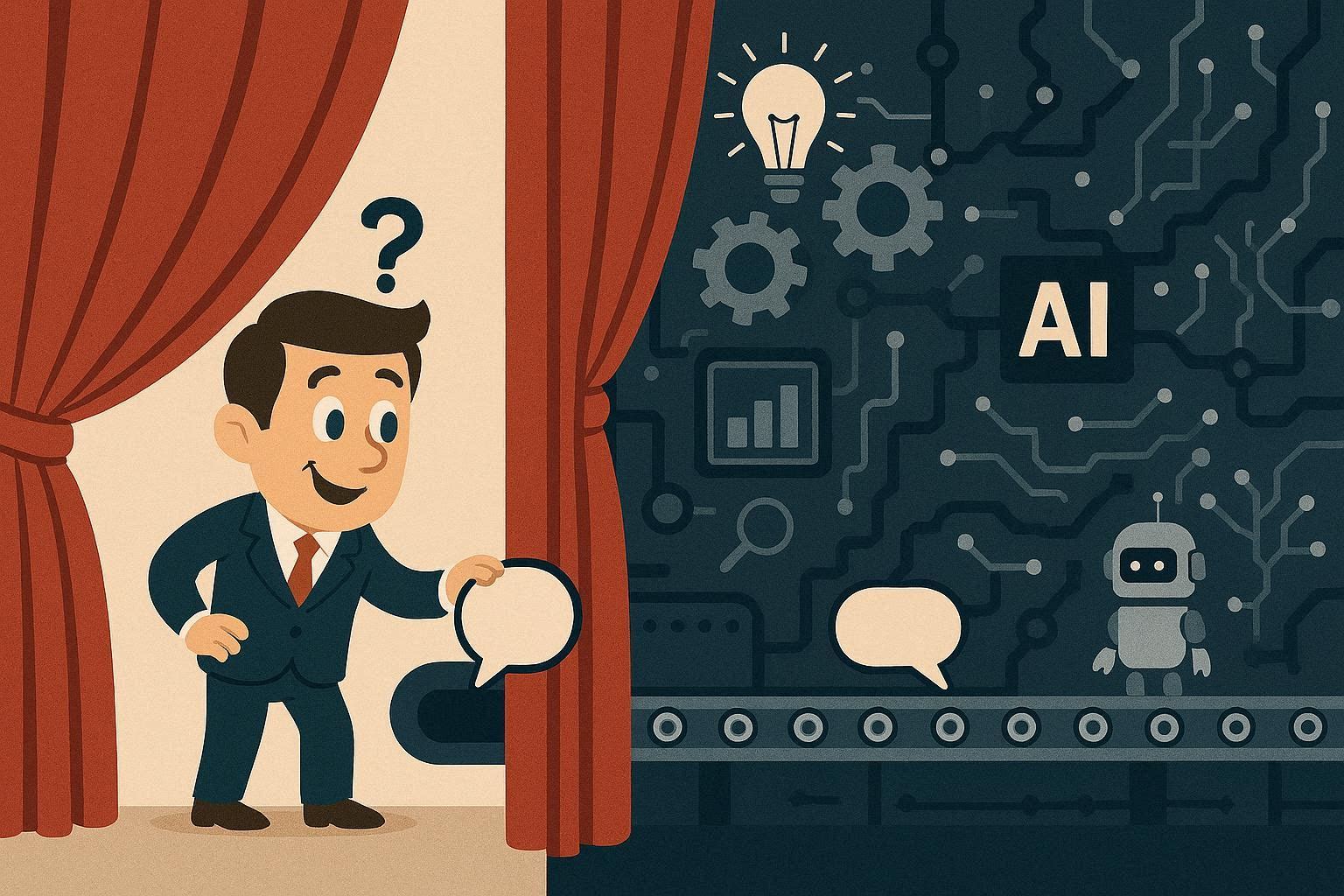
There’s a common view in tech: once you build an AI model or an agent, the hard part is done. But any technology leader knows the real challenge begins after deployment, especially with Generative AI, where outputs aren’t predictable facts but fluid language and reasoning.
That’s why observability (the ability to see, understand, evaluate, and respond to how AI systems behave in real time) is now a mission-critical capability for organisations scaling AI beyond pilots into production.
What Observability Really Means in AI
In traditional software, observability tools capture logs, metrics, traces and dashboards so you can troubleshoot slow APIs or failed transactions. In AI systems, it goes deeper:
- It evaluates the quality of AI responses
- It detects drift (when model behaviour starts deviating over time)
- It measures safety, relevance, and accuracy, not just uptime
- It traces decisions, even in multi-agent systems
- It embeds governance and compliance metrics into the core operational view
In practice, observability in AI means combining continuous evaluation, monitoring, tracing, and auditing (not just for system health, but for trust and business assurance).
From Pilot to Production: The AI Lifecycle Observability Enables
The AI lifecycle has three essential phases where observability adds real business value:
- Model Selection & Benchmarking Before you build anything, you need to choose models that truly serve your business use cases, not just the “latest and greatest.” Observability tools help teams benchmark models on quality, safety, bias, groundedness, and task performance so decision-makers can compare apples to apples. This isn’t academic, it directly impacts customer experience, cost per transaction, and operational risk.
- Pre-Production Evaluation Early testing of your AI apps and agents using systematic evaluation datasets and simulators reveals how likely they are to perform in real environments. Observability here reduces costly rework, prevents embarrassing outcomes, and ensures compliance before launch.
- Post-Production Monitoring Live AI isn’t static. Models drift. User behaviour changes. Data sources evolve. Continual monitoring identifies quality decay and safety regressions before users are impacted. Alerts and dashboards give teams early warnings so they can act quickly, reducing downtime, reputational risk, and business impact.
Why Enterprises Need Observability Now, Not Later
AI isn’t a one-off deployment. It’s a living system operating in unpredictable contexts. The organisations that win with AI are the ones that treat it like a mission-critical platform, not a point solution. Observability delivers on four strategic needs:
- ✔ Trust & Governance: Executives and regulators increasingly expect visibility into how AI makes decisions, not just what it outputs. Built-in evaluation and safety metrics help meet compliance frameworks and internal governance.
- ✔ Customer Experience & Reliability: Drift or hallucinations in models cost customer trust. Observability catches quality dip early.
- ✔ Operational Efficiency: Developers spend less time firefighting and more time innovating when observability gives clear signals and actionable insights.
- ✔ Scalability & Cost Control: Understanding performance trends, model behaviour and usage patterns lets you right-size resources and maintain high performance at scale.
Real Business Outcomes You Can Aim For
Organisations that bake AI observability into their engineering workflows and governance frameworks can:
- 📌 Reduce time-to-market for AI products by eliminating guesswork in testing and deployment.
- 📌 Increase operational uptime and reduce quality incidents.
- 📌 Align AI systems to regulatory and ethical standards — without slowing down innovation.
- 📌 Make data-driven decisions on model upgrades, performance tradeoffs, and cost optimisation.
- 📌 Build stakeholder confidence in AI outputs — from board room to customer touchpoints.
The Role of Evaluators: How You Measure What “Good” Actually Means
One of the biggest mistakes organisations make with AI is assuming that if a system runs, it must be working well.
In reality, the most dangerous failures in AI aren’t outages, they’re quiet quality failures:
- Answers that sound confident but are wrong
- Outputs that slowly drift away from business intent
- Responses that are technically correct but commercially useless
- Subtle safety or compliance issues that only show up at scale
This is where evaluators come in.
Evaluators are structured checks that continuously score AI outputs against the things your business actually cares about — not just technical performance, but business quality signals. These can include:
- Relevance: Did the response actually answer the user’s question?
- Accuracy / Groundedness: Is it based on real data and sources, not hallucination?
- Safety & Compliance: Did it avoid restricted content, sensitive data, or policy breaches?
- Tone & Brand Alignment: Does it sound like your organisation, not a generic chatbot?
- Task Success: Did it complete the job the user asked it to do?
From a business perspective, evaluators turn “gut feel” into evidence-based confidence. Instead of debating whether your Copilot or AI agent is “good enough,” you can point to concrete quality scores, trends over time, and thresholds that trigger action.
In other words: evaluators give leaders a dashboard for trust.
And standardising these measured of success to Microsoft’s OOTB evaluators not only make it easy to get up and running with the tools provided, but also allow your implementation(s) to be compared with others in your organisation and throughout the industry.
Why Evaluators Are a Strategic Advantage (Not Just a Technical Feature)
Most teams treat evaluation as a one-time testing activity before go-live. That’s a mistake.
In real-world environments, AI behaviour changes, because user prompts change, data sources evolve, business rules shift, and models get upgraded behind the scenes. Without continuous evaluators, you don’t notice problems until customers or staff complain.
Organisations that take evaluators seriously unlock four major business advantages:
- Faster, Safer Innovation Teams can confidently roll out new prompts, agents, or models knowing they have automated guardrails watching quality and safety. That reduces fear-driven delays and speeds up time to market.
- Early Warning for Quality Drift Instead of waiting for a spike in support tickets, evaluators surface slow declines in relevance, tone, or accuracy. That gives you time to fix issues before they damage trust or brand reputation.
- Executive-Ready Reporting Evaluator scores translate complex AI behaviour into business language: “Customer answer accuracy dropped 12% after last model update” is far more actionable than “The LLM seems off lately.”
- Smarter Cost and Model Decisions When you can compare models or prompt versions side by side using the same evaluators, you stop guessing. You can justify spending more on a higher-quality model only when it actually delivers better outcomes.
The net result? Evaluators shift AI from a black box into a managed business system, one that can be governed, improved, and scaled with confidence.
Bringing It All Together
If your business is investing in AI, whether for customer service, internal automation, predictive insights, or agent-driven workflows, observability should be a first-class concern, not a bolt-on afterthought.
Observability transforms AI from an experimental plaything into a dependable business capability. It’s the backbone of responsible, scalable, and trustworthy AI, the only kind of AI that will survive scrutiny from customers, regulators, and internal stakeholders alike.
Leave a Reply