
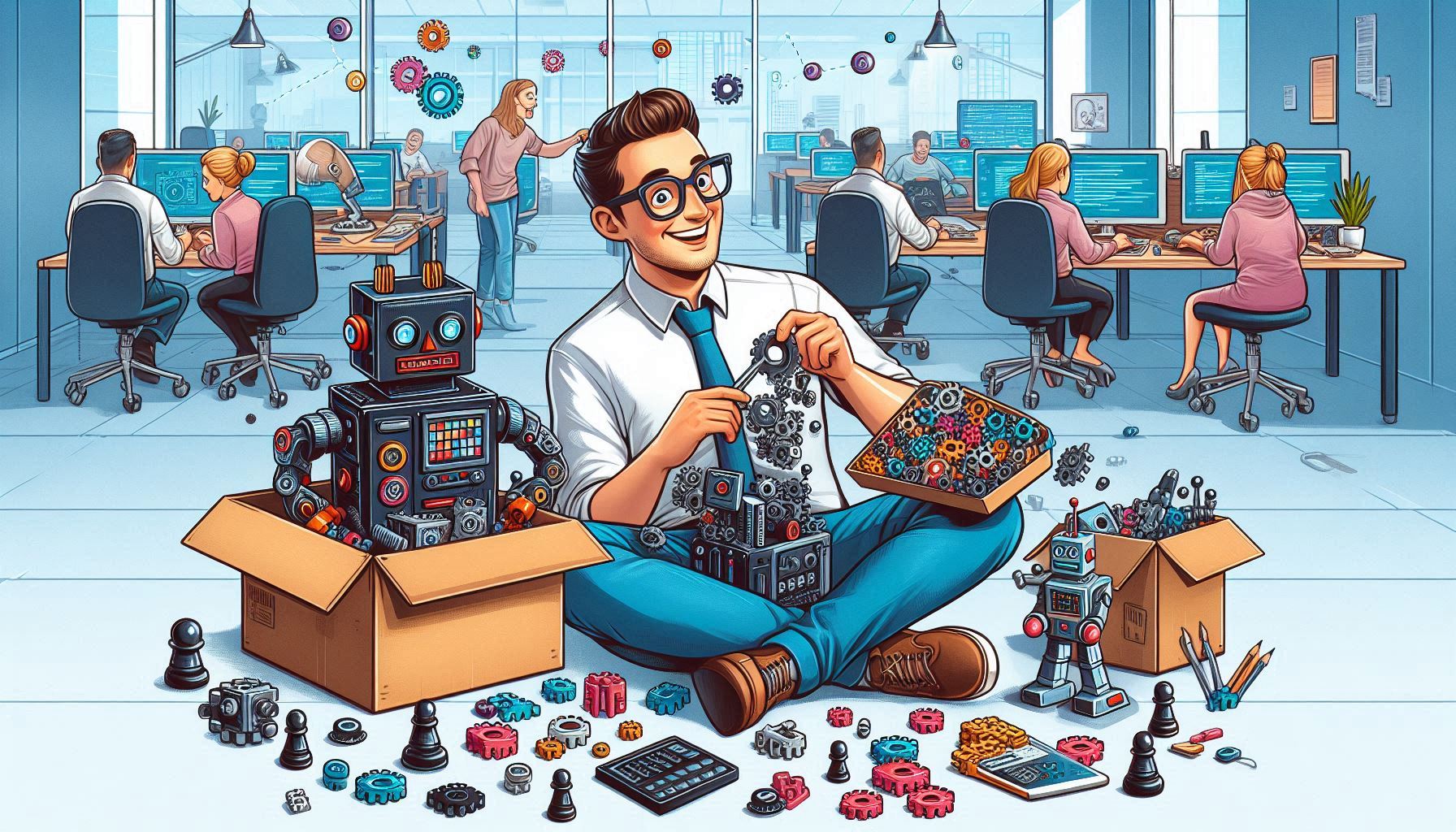
In one of our internal team chats recently, a senior developer shared a fully working Power App he’d built ‘in his spare time’.
No client. No backlog item. No sprint goal.
Just… play.
It was whimsical. It was clever. It made everyone smile. And quietly, it demonstrated an incredible depth of Power Platform capability.
That moment stuck with me, because it captures something we don’t talk about enough in professional software delivery:
Play isn’t the opposite of discipline. It’s often the foundation of mastery.
The Myth: “Serious Work Comes From Serious Structure”
In consulting, architecture, and enterprise delivery, we’re trained to value:
- frameworks
- best practices
- governance
- repeatable patterns
- predictable outcomes
All of that matters. Hugely.
But there’s a shadow side when everything becomes structured, templated, and optimised too early.
When that happens:
- we solve familiar problems very efficiently
- but struggle to solve new ones elegantly
- and we quietly stop discovering better ways to build
Especially in low‑code platforms, where creativity is the leverage.
What Play Actually Looks Like in Power Apps
Play doesn’t mean “random” or “undisciplined”.
In practice, it looks like:
- building something purely because “I wonder if this is possible”
- pushing a platform well beyond its comfort zone
- exploring edge cases you’d never justify on a client budget
For example:
- One of our developers built games in Canvas Apps, chess, puzzles, crosswords.
- To make that work, they had to overcome: drag‑and‑drop limitations large grid‑based layouts deeply nested galleries performance constraints no tutorial ever covers
At the time, it was “just for fun”.
Later? That same thinking became the technical foundation for a real asset placement and office‑layout application.
Same problems. Same constraints. Now delivering real business value.
Play didn’t distract from delivery, it enabled it.
Creative Solutions vs Repeating Safe Ones
Structured delivery is excellent for:
- known patterns
- stable requirements
- incremental improvement
But creative exploration is where we learn:
- why some patterns exist
- where they break
- and what to do when they don’t quite fit
When people only ever build:
- forms
- CRUD apps
- approval flows
- the same layouts with different data
They get fast… but narrow.
When people are allowed to:
- build something weird
- impractical
- playful
- or deliberately difficult
They become adaptable.
And adaptability is the real senior skill.
Low Code Thrives on Play (More Than We Admit)
Low‑code platforms like Power Apps sit in a unique space:
- abstracting complexity
- but still exposing real engineering trade‑offs
That means:
- experimentation teaches you more than documentation
- curiosity uncovers performance, UX, and scalability lessons early
- creative misuse often reveals the platform’s true strengths and limits
This is especially true now.
Why This Matters More Than Ever (Code Apps, Vibe Coding, AI)
With:
- Code Apps
- deeper extensibility
- “vibe coding”
- Copilot and AI‑assisted development
It has never been easier to experiment safely.
You can:
- generate scaffolding instantly
- test ideas in minutes instead of days
- explore multiple approaches without sunk cost
In this world:
The differentiator isn’t who knows the most features. It’s who knows what’s possible.
And that knowledge comes from play.
A Note on “Not Over‑Booking Yourself”
This doesn’t mean:
- hacking all night
- burning weekends
- or turning play into pressure
The healthiest version of this culture is:
- small
- optional
- celebrated
- not expected
A lunchtime experiment. A Friday curiosity build. A “what if?” app that never ships.
That’s enough.
The Business Case (Yes, There Is One)
For leaders and clients, play:
- produces more confident architects
- reduces design risk on novel problems
- shortens discovery cycles
- improves solution elegance
- and creates teams that adapt instead of panic
For practitioners, it:
- accelerates learning
- builds intuition
- keeps the work joyful
- and quietly future‑proofs careers
Final Thought
If you want predictable outcomes, optimise structure.
If you want better outcomes, protect space for play.
Especially in low‑code. Especially in modern apps. Especially now.
- More: Link to watch Suseel’s Chess App – Vid 1 https://youtu.be/TadDvyzOom0 & Vid 2 https://youtu.be/6mjOw6Nyi0U
Leave a Reply