
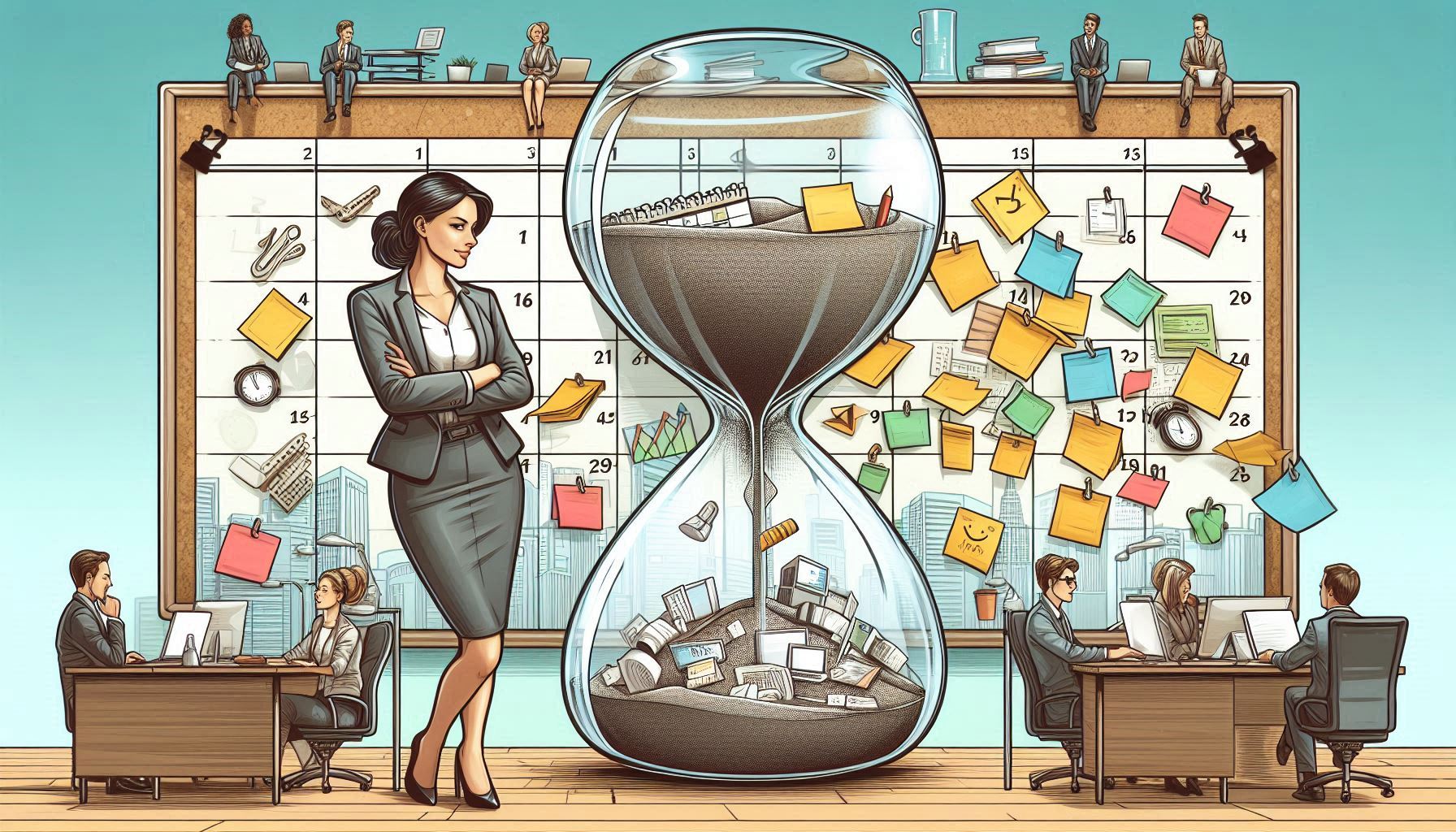
This week, I noticed something interesting. My 12 year old son and a 40 year old executive level client off-hand both gave me the exact same reason for not doing something that would lower their stress and improve their productivity.
Paraphrased: I’m not good at estimating how long things will take.
Different stages of life. Same excuse.
Here’s the uncomfortable truth. Estimating time is not a personality trait that some people are good at and others aren’t. It is a skill. And like any skill, it improves with practice.
In business, this skill shows up everywhere.
Consultants estimate DevOps cards. Presales teams scope proposals. Project managers forecast timelines. Leaders assess team capacity. Clients estimate how long reviews and approvals will take. Every one of us estimates how much we can fit into a day.
And most of us are guessing.
When we avoid (or delegate) estimating because we are “bad at it,” three predictable things happen.
We overcommit. We underestimate complexity. We end the day feeling behind.
That feeling of constant pressure is often not about workload. It is about mismatch. We plan based on optimism instead of evidence.
A better approach is to treat estimation as an experiment.
Make a guess. Do the work. Compare your estimate to reality. Adjust.
If you were way off, that is not failure. It is data.
In DevOps, teams refine their story point estimates over time because they review what actually happened. The same logic applies to your calendar. If a two point task consistently blows out into a full afternoon, that is feedback. If presales scoping repeatedly underestimates integration effort, that is a learning opportunity. If client approvals always take a week, not two days, that is reality you can plan around.
This is not about perfection. It is about calibration.
When you regularly compare estimates to actuals, patterns emerge.
Meetings take longer than expected because of context switching. Deep work needs protected time. You are trying to schedule twelve hours of work into eight. Admin expands to fill any gap. Which is also true of other tasks if you over estimate. If you allow too much time like 4 days for a simple task you could do in 1 day, you’ll probably find yourself taking the full 4 days.
With better calibration, your plans become more realistic. Realistic plans reduce stress because your day aligns with your capacity.
And here is the key point. Capacity is not just a team level concept. It is personal.
Every role requires estimating your own bandwidth. If you cannot realistically assess your own capacity, you will either underperform or burn out. Sometimes both.
Try something simple tomorrow.
Pick just one task. ignore the rest. Estimate how long it will take. Time it to the minute. Compare.
If it takes longer than expected, you have learned something useful about complexity, distractions, or your own focus. If it takes less time, you have just reclaimed time you did not think you had.
Either way, you win.
Professionals who get better at estimating are not magically more productive. They are more accurate. That accuracy compounds. It improves delivery, scoping, credibility, and trust.
And it starts with dropping the belief that “I’m just bad at estimating.”
You are not bad at it. You are just underpracticed.
That is a fixable problem.
Leave a Reply